Jack Benson
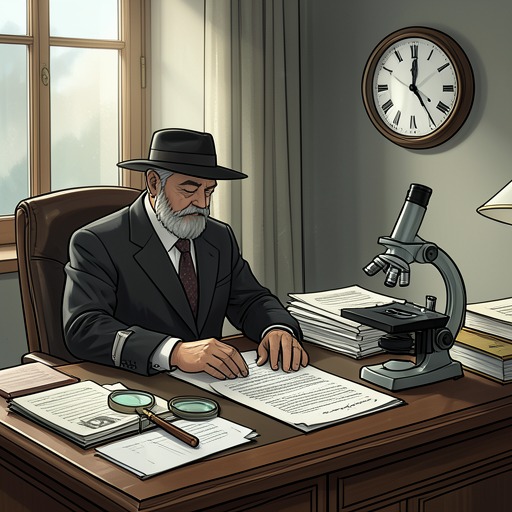
Blow OutJack Benson, a senior crime scene investigator, is a key field investigator in the inquiry into the ricin attacks. His scene work at Worsley Golf Course provides Joanne Stuart’s team with physical leads to test, while his reports show how weather, public access and incomplete traces constrain what a crime scene can establish. He also appears as part of a broader investigative process built around shared information, coordinated analysis and later formal review.
Identity and Role
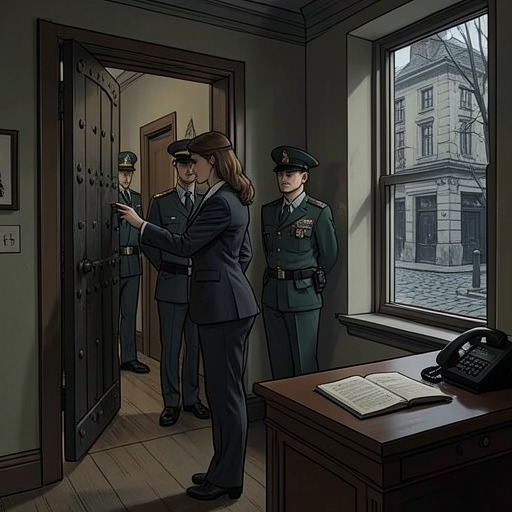
Benson is identified as a senior crime scene investigator working with Joanne Stuart’s major investigation team. When Stuart arrives at the incident room, he is among the familiar staff already there, alongside intelligence analyst Duggie Wallace and Detective Constable Jimmy Hulme. His position gives him a practical role in the investigation: while other officers compile intelligence, interview potential witnesses and review surveillance, his team examines the likely crime scene for recoverable evidence.
Stuart assigns him a crime-scene team for Worsley Golf Course, then understood to be the closest available point to the attack on the victim. She warns that the previous night’s and morning’s rain may have compromised trace evidence. The assignment therefore begins with uncertainty: Benson must search a location exposed to the weather, rather than a controlled or undisturbed setting.
Work at Worsley Golf Course
Benson reports his findings to the incident room by video, allowing the whole team to hear the update at once. Stuart has deliberately made shared access to information a principle of the inquiry, so that anyone in the room might recognize a missing connection. Benson’s report becomes an early test of that method: his team’s observations are presented collectively, rather than passed only through a chain of individual briefings.
The investigators recover a dull silver object from the tee where the victim had been standing when he thought a wasp had stung him. Benson presents it to the team for examination; the possibility that it contained poison is raised, but the material does not establish that conclusion by itself. Its value lies in giving the investigators a tangible object to test against the developing account of the attack.
Benson also describes a possible firing position in nearby woods. Flattened grass and broken branches suggest that someone may have made room for a view of the tee. The team finds partial boot prints leading to and from the spot, but Benson cautions that they are not clear enough to know whether they can be compared successfully with prints in the national database. A member of his team is lifting them while the investigation continues.
A scrap of fabric caught on a nearby branch offers another potential trace, but it has no identified owner or comparison sample at this stage. Benson does not present it as a solved clue: investigators would need something to match it against. His account distinguishes what the scene has yielded from what the evidence can actually prove.
Limits and Investigative Significance
Benson traces the apparent route from the suspected firing place to a path behind the woods, running along the perimeter fence of nearby houses and out onto Leigh Road. The route also extends eastward away from the tee. Yet the path has been used by many people since Friday, including dog walkers, and rain has left it muddy. Those conditions make it difficult to separate the possible shooter’s prints from later activity. The scene thus supplies leads, but also explains why those leads may not identify anyone on their own.
The wider inquiry remains open as the police assemble separate strands of evidence. At a briefing to the Mayor and Chief Constable, Stuart describes the partial boot prints and fabric from the Manchester scene alongside hours of passive media, principally from fixed-speed and automatic number-plate-recognition cameras. The items Benson’s team recovered form part of an evidence set that must be assessed alongside other investigative lines; the briefing does not report a suspect identified through his findings.
Place in the Investigation
Benson’s contribution is procedural as well as forensic. His direct update lets the team assess the object, possible firing position, prints and fabric together, while the uncertainty in his report keeps observation distinct from conclusion. The scene work gives the inquiry concrete things to investigate without making any one trace decisive, and makes the effects of rain and ordinary public use part of the case’s evidentiary problem.
The investigation later enters a stage of formal accountability after a man dies during a police operation. Its first debriefing takes place with the Independent Police Complaints Commission already involved, alongside an internal review and preparation of a press release. The available account places Benson among the investigators and evidentiary work of the wider inquiry, but does not specify a separate role for him in that debriefing or give him a personal resolution. His narrative significance rests instead on the careful, qualified recovery of evidence that makes the investigation’s progress—and its limits—visible.